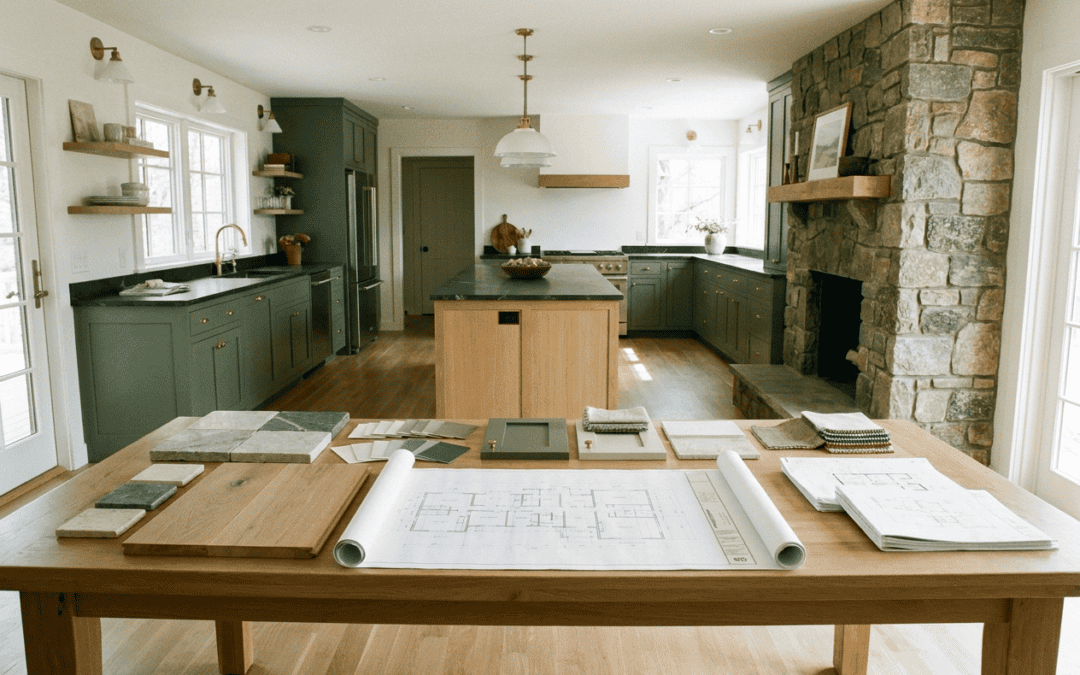
The design build meaning is straightforward: one responsible team coordinates design and construction instead of making the homeowner manage separate designers, contractors, estimates, and handoffs.
That structure changes more than convenience. It affects when pricing enters the conversation, who solves conflicts between drawings and field conditions, and whether a costly idea is challenged before it reaches construction.
For homeowners comparing remodeling companies, design-build is often the stronger delivery method for a complex renovation. It is not automatically cheaper or faster. A weak construction company does not become capable by adopting the label. The value comes from real coordination, clear responsibility, and construction expertise entering the design process early.
What Does Design-Build Mean for a Homeowner?
Design-build is a project delivery method that places design and construction under one coordinated structure. Rather than completing plans with one firm and later finding a builder, the homeowner works with a design builder involved across the project lifecycle.
The Design-Build Institute of America identifies the single-contract structure as the fundamental difference between design-build and other project delivery systems. The strongest version is not a general contractor helping choose finishes. It is an integrated team connecting architectural design, estimating, project management, and field execution.
When evaluating a home remodeling contractor, homeowners should look beyond the design-build label and ask how the company coordinates planning, selections, estimating, and construction responsibility.
Design and Construction Develop Together
In a traditional arrangement, a designer may finish the plans before a contractor studies how they will be built. Design-build connects those conversations while the plans can still change.
The design build team can examine layout, structure, materials, sequencing, and project costs at the same time. A designer might propose a wide opening between rooms while the builder explains that it requires a major beam, new footing work, or relocated mechanical systems.
Construction concerns should not control every design decision. They should expose the tradeoff before the homeowner pays to develop an impractical plan.
What the Design Builder Owns
A design builder should guide the entire project from the initial concept through design development, estimating, the pre-construction phase, and construction.
The firm may coordinate design and construction services, engineering, permits, selections, scheduling, procurement, construction administration, and closeout. Outside architects or engineers may participate, but the homeowner should not have to referee them.
When a detail cannot be built as drawn, the design build contractor should organize the answer.
A Single Contract Does Not Require One Payroll
A single contract does not mean every architect, engineer, designer, or trade partner must be an employee of the same company.
Many capable design build firms rely on trusted outside specialists. That is normal. The issue is not payroll; it is responsibility.
A legitimate design build company remains the single entity accountable for coordination. A firm that hands the homeowner a list of consultants and says, “Call them yourself,” is shifting the work back to the client.
How the Design-Build Process Works
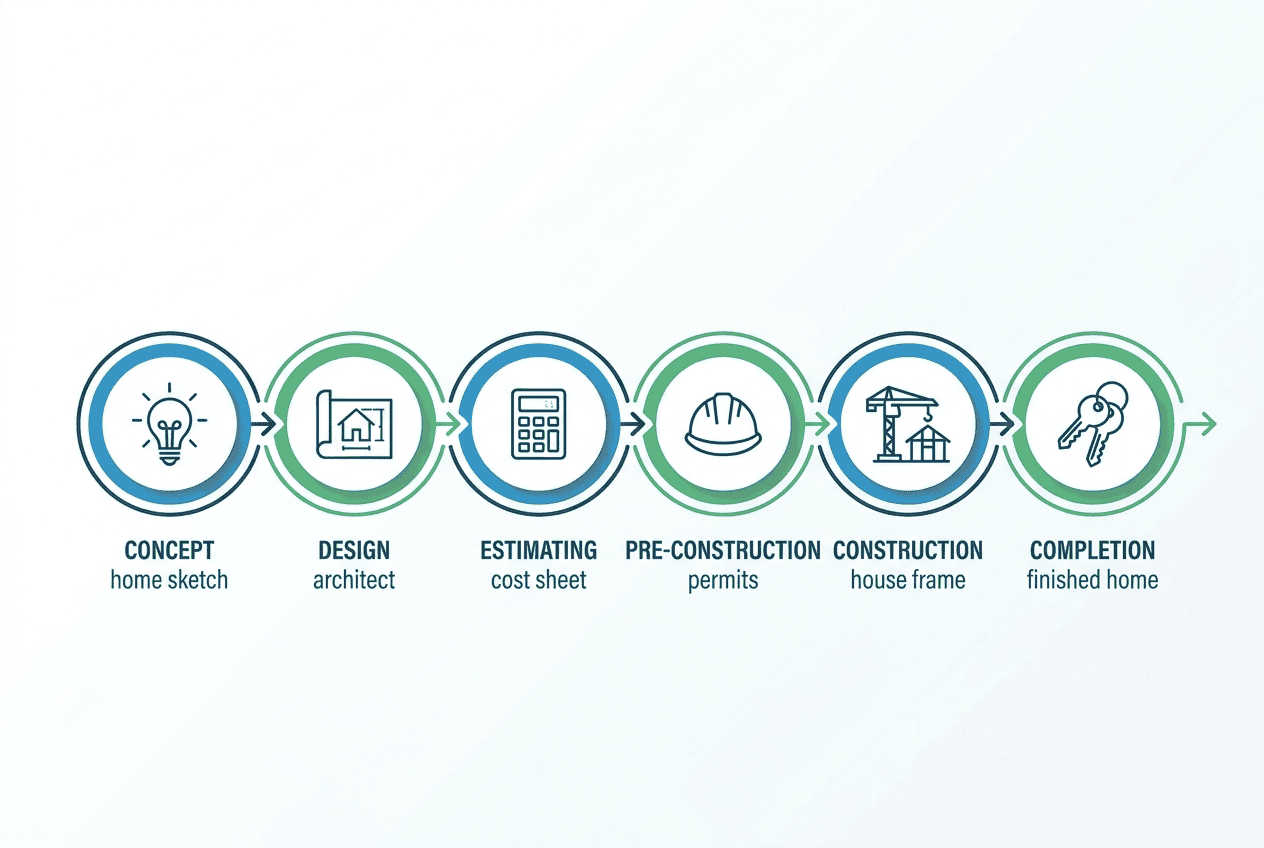
The design build process is not a rigid line where design ends and construction suddenly starts. The project phases overlap enough for pricing, feasibility, and construction methods to shape the plans.
This detailed guide to the design-build remodeling process explains how planning, estimating, selections, and construction remain connected through the design and construction phases. The practical outline is simpler.
Initial Concept and Feasibility
The work begins with the homeowner’s goals, not drawings.
A request for a larger kitchen may really be a circulation problem, poor storage, or a wall separating the kitchen from the rooms where the family gathers. The experienced design build team needs to identify the actual problem before proposing square footage.
Feasibility comes next. Structure, utilities, rooflines, setbacks, permits, and site access can all reshape a build project. Skipping that review is how homeowners become attached to an initial concept that never made sense.
Design Phase With Early Pricing
During the design phase, the team develops layouts, materials, and technical details. Estimating should advance beside that work, not wait until every drawing is complete.
Moving a sink may be easy in one house and require cutting a slab in another. Enlarging a window may be a simple opening change or a structural revision affecting the wall above it.
Early collaboration gives the homeowner useful choices while the design process is still flexible. Pricing should become more precise as decisions are confirmed.
Pre-Construction Turns Ideas Into Instructions
The pre-construction work should settle scope, drawings, selections, permits, allowances, site logistics, and long-lead products.
Unresolved selections are not harmless. Unknown tile, plumbing fixtures, cabinetry, or appliances leave parts of the estimate and construction schedule unknown too.
A professional project team should state which decisions are complete, which remain open, and what those open items could affect.
Construction and Closeout Stay Connected
During the construction phase, the same team should remain involved. Demolition may expose an unexpected condition. A drawing may need clarification. A field adjustment may protect the project vision without changing the intended outcome.
That continued connection is central to design build construction. The design team should not vanish once permits are approved.
Closeout includes the final walkthrough, punch-list work, inspections, documentation, and warranty information. A successful design build project is complete only when the agreed scope is finished and the homeowner knows what happens next.
Design-Build vs. Design-Bid-Build
The difference between design build and design bid build is not simply who draws the plans. It is how responsibility moves through a construction project.
For a substantial remodel, the design build method usually has the practical advantage because the people building the work can influence it before the design is locked.
How Design-Bid-Build Works
Under the design bid build method, the project owner first hires a designer or architect. That professional completes the plans and construction documents. Contractors then bid the finished package.
The homeowner usually holds separate contracts with the designer and builder. The design bid build process is sequential: design, bidding, then construction.
This delivery method can work when documents are thorough, the homeowner wants competitive bids, or an architect is already leading the work. Its weakness is the handoff. The contractor enters after many costly decisions are settled.
Accountability Is Split
In traditional design bid build, the designer owns the design and the contractor owns construction. That division sounds clean until a field problem lands between them.
The builder may say the detail was drawn incorrectly. The designer may say the contractor misunderstood it or failed to ask questions. The homeowner becomes the project owner managing separate entities.
The design build delivery method keeps those arguments inside the project team. The professionals may still disagree, but the client should not be managing disparate contracts to obtain a solution.
Communication Has Fewer Handoffs
A remodel produces hundreds of decisions involving appearance, structure, code, schedule, and project costs.
With separate contracts, homeowners often carry information between the design team and construction team. That places more construction management on the client than many expect.
A coordinated design build team can provide streamlined communication and a clear single point of contact. That only works when decisions are documented and shared. One contact who does not return calls is not an advantage.
Bid Comparisons Can Be Misleading
Design bid build projects make it possible to send the same plans to several contractors. That can help, but bids are comparable only when scopes, allowances, exclusions, and assumptions match.
One bidder may include protection, cleanup, engineering, and permit work. Another may leave those items out. The lower proposal is not necessarily the lower final project. For a complicated remodel, choosing an incomplete low bid is usually the wrong move.
The Practical Design-Build Advantage
The main design build advantage is not that remodeling becomes easy. It is that fewer problems fall into the gap between design responsibility and construction responsibility.
The dedicated guide to design-build remodeling benefits explains how early collaboration, unified responsibility, and clearer communication can improve the homeowner’s experience. The advantages below are the ones that matter most in practice.
One Responsible Team
When a design question affects construction, the homeowner should not have to decide which professional caused it.
The design build firm owns the response. That supports simplified project management and gives the client a clear path for questions, changes, and approvals.
The contract still matters. A vague agreement can undermine even an experienced design build team.
Builders Challenge Problems Earlier
Early collaboration lets the team question expensive or awkward details before they are fully developed.
Suppose a designer removes a dropped beam to create a clean ceiling. The construction side may find that the flush-beam option requires major framing changes and work in the rooms above. The homeowner can then decide whether the appearance justifies the disruption.
Discovering that during design is far better than discovering it after demolition.
Overlap Can Improve Construction Speed
Some design, procurement, permitting, and pre-construction tasks may overlap, which can improve construction speed.
A project delivery study co-funded by the Construction Industry Institute and the Charles Pankow Foundation compared design-build, construction manager at risk, and design bid build projects using cost, schedule, and quality measures. Its findings provide useful industry context, but they are not a timing promise for a residential remodel.
Permits, custom products, site conditions, owner selections, and workload still control timing. A streamlined process can remove needless waiting. It cannot make a backordered window arrive.
Does Design-Build Create Cost Savings?
Design-build can create cost savings, but that phrase is often oversold. The more dependable benefit is earlier cost alignment. A well-run process exposes expensive decisions while they are still editable.
Early Estimates Expose Mismatched Scope
A homeowner’s project vision may not match the available investment. Design-build does not erase that conflict; it reveals it sooner.
If the first concept combines an addition, structural work, premium cabinetry, and relocated utilities, early estimating may show that the scope needs revision. The team can reduce the footprint, preserve more existing structure, or change finish priorities before completing the drawings.
Waiting until bidding to discover the same problem wastes time and design fees.
Coordination Can Limit Avoidable Cost Growth
Cost growth often starts with incomplete information. A missing detail becomes a field decision. A small allowance becomes a product costing far more. A layout reaches construction before anyone notices a duct, beam, or plumbing stack in the way.
Coordinating design and construction cannot eliminate change orders or concealed damage. It can reduce changes caused by preventable conflicts and unrealistic assumptions.
A Low Starting Number Can Hide Project Costs
A proposal can look attractive because it leaves work out. Thin allowances, undefined materials, missing protection, and vague cleanup language do not eliminate cost. They push it into later selections and change orders.
Homeowners should compare included scope, responsibility, assumptions, and how uncertainty is handled. A complete estimate is more useful than a lower number built on wishful thinking.
Industry Statistics Need Context
Research comparing project delivery systems has reported favorable cost and schedule performance for design build projects, including findings from commercial construction and office buildings.
Those results should not be treated as guarantees for a home remodel. Residential work has different site conditions, approvals, selections, and owner decisions.
The useful conclusion is narrow: early coordination can reduce redesign, waste, and delay. It cannot guarantee a fixed percentage of cost savings.
The Design-Build Label Is Not Enough
Design-build can create a better remodeling process, but only when the company has the people and systems to make it work. The label itself does not tell you whether the plans will be thoughtful, the estimate will be reliable, or the finished work will be well built.
A contractor can call itself a design build firm and still operate with weak drawings, loose allowances, poor communication, and little coordination between the office and the jobsite. Homeowners need to look at how the company actually works, not just how it describes its services.
Look Closely at the Design Work
For smaller projects, basic drafting and finish guidance may be enough. A major renovation is different.
When a project changes traffic flow, removes walls, alters rooflines, or affects several rooms at once, the design work needs to account for more than appearance. The layout, structure, mechanical systems, materials, and construction details all need to work together.
Ask who creates the plans, who reviews them for buildability, and whether that person stays involved when questions come up during construction. Completed projects will tell you more than a polished sales presentation.
Do Not Treat an Early Estimate as a Final Number
A reliable estimate depends on how much of the project has actually been defined.
Before pricing can become dependable, the firm needs a clear scope, realistic product allowances, input from trade partners, and enough completed selections to understand what is being built. A contractor who gives a highly specific number before gathering that information is usually making assumptions the homeowner will pay for later.
The estimate should become more detailed as the design develops. If the number never changes while the scope and selections keep changing, something is probably being missed.
Field Execution Still Determines the Result
A coordinated design process cannot make up for weak construction management. The finished quality still depends on skilled trades, clear standards, regular supervision, and a project manager who catches problems before they are covered up. Details that look simple on a drawing can still be installed poorly in the field.
Ask who will supervise the project, how often that person will be onsite, and how incomplete or incorrect work is documented and corrected. A strong design build process should carry the design intent all the way through the final walkthrough.
The Homeowner Still Makes Major Decisions
Good design and construction services organize choices and explain tradeoffs. They do not remove the homeowner’s authority.
The client should still approve the layout, materials, scope changes, and major financial decisions. The collaborative nature of the process does not mean surrendering control; it means making informed decisions with one team responsible for carrying them through.
Ask Who Performs and Reviews Design
The company may use internal designers, outside architects, engineers, or a combination. Outside specialists are not a red flag. Unclear responsibility is.
Ask who develops the plans, when the builder reviews them, and who resolves conflicts between drawings and existing conditions.
Ask When Estimating Begins
Estimating should begin before design is finished. Ask when the first cost review occurs, how estimates are updated, and what happens when the design exceeds the target investment.
A company that refuses meaningful pricing until all drawings are complete is recreating traditional design bid build without the benefit of true competitive bidding.
Read the Construction Contracts
Review both the design agreement and construction contracts.
Some firms use a single contract. Others use sequential agreements for design and construction services. Either can work, but ownership of drawings, additional services, termination rights, and the move into construction must be clear.
Confirm Accountability During Construction
Ask who answers design questions after work begins. The designer should remain available when construction administration is needed. The project manager should explain how clarifications and field changes are recorded.
If the design and construction departments behave like unrelated companies, the firm is not providing an integrated delivery method.
Is Design-Build Right for Your Remodel?
Design-build is usually the better delivery method when a remodel involves structural changes, connected systems, extensive selections, or a scope that benefits from pricing during design.
It Fits Interconnected Work
The more one decision affects another, the more useful an integrated team becomes.
Moving walls affects structure. Structure affects mechanical routes. Mechanical routes affect ceilings and cabinetry. Cabinetry affects appliances, electrical work, and lighting. Separating those decisions among professionals who rarely communicate creates avoidable risk.
Traditional Delivery Still Fits Some Projects
Traditional design bid build may suit a homeowner who already has an architect, wants independent design advocacy, or has completed documents ready for pricing.
It can also make sense when the design is highly specialized and the architect will administer construction independently.
Trying to force an established architect-led project into another firm’s design build method is usually the wrong call.
Choose the Team, Not the Label
“Design-build” should describe operations, not marketing. Review the design quality and completed construction. Ask when estimating starts, who stays involved, how changes are documented, and where responsibility sits when something goes wrong.
Successful design build projects depend on the same team protecting the project vision from the first serious conversation through the final details. That is the standard.
Discuss Your Remodeling Project
A well-run design-build process should make responsibility clearer, uncover difficult tradeoffs earlier, and give homeowners better information before construction begins.
TLT Contracting helps homeowners plan and complete coordinated remodeling projects with design decisions, material selections, estimating, and construction managed as one connected process. Contact the team to discuss your home, priorities, and the work required to create a finished space that functions the way it should.